
Rebuilding Your Altadena Home In The Style You Love (What Craftsman, Spanish Revival, and Mid-Century Modern Mean When You Are Starting Over)

I grew up in Brooklyn, raised by two graphic designers. My father later became a Feng Shui consultant, and my first real design project was helping him work on the original Whole Foods in London -- a historical building being opened up and reimagined. I learned early that a building is not just a structure. It is an accumulation of decisions, details, and materials that tell you something about the people who made it and the place it belongs to.
When I came to Los Angeles for the first time -- a city I had never been to, where I did not know anyone -- I fell in love with the architecture. Southern California has this remarkable layered quality. Craftsman bungalows next to Spanish revivals next to mid-century moderns, all of it shaped by a climate and a culture that invited experimentation. Altadena especially carries that history. The homes here were built with intention.
Rebuilding after a fire is one of the hardest things a family can face. But it is also, when you are ready to see it this way, an opportunity to rebuild with the same intention those original homes were built with. To get it right this time. To make choices you will still love in 30 years.
Here is what I think about when I am helping a client rebuild in each of Altadena's signature styles.
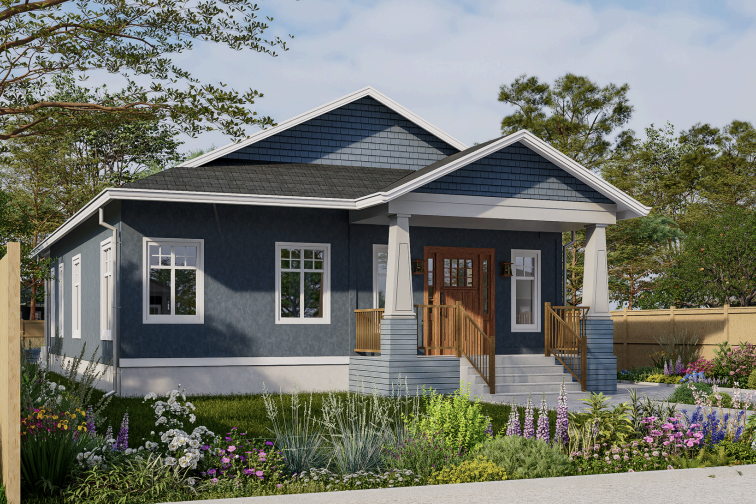
Craftsman
Craftsman is my favorite architectural style. I will say that clearly. It is full of wood and a love of craft and a deliberate heaviness that keeps a house cool while still paying attention to the bones. The Gamble House in Pasadena is one of the greatest pieces of architecture I have ever walked through. The California bungalow version -- the kind that was so common in Altadena -- was considered accessible architecture, built for real people, which I love.
When I am designing a craftsman interior, I start with the materials that define the style. Wood is the foundation: medium-toned, heavily grained floors that call back to that love of natural texture. Painted shaker cabinets in the kitchen, often in the deep greens and blues that are historically part of the craftsman palette. The color is not an affectation -- it is correct.
The detail in craftsman comes from contrast. Dark painted cabinets against light countertops. A sapphire or emerald tile backsplash as a band of jewel-tone color against white upper cabinets and white counters. The hardware in a craftsman kitchen should feel warm -- brushed bronze or polished nickel rather than chrome, which reads as too cold for the style.
One thing I often see in craftsman rebuilds that I push back on gently: people sometimes want to strip the style down until it disappears. They keep the roofline and the porch columns but make the interior feel generic. I understand the impulse -- it feels safer. But the craftsman style gets its power from commitment. The details are what make a room feel like itself.
.jpg)
Spanish Revival
Spanish revival is a style that rewards specificity. There are actually several distinct sub-styles within what we call "Spanish" in Southern California -- Mediterranean, Santa Barbara Spanish, the ornate revival, and a newer contemporary Spanish that has smoother lines and less surface decoration. Each is a legitimate choice. They are not the same choice.
What they share is wood. Lots of it. Spanish revival calls for wood in the cabinetry, in the floors, and often in the ceiling beams. When I am working with a white oak cabinet door in a contemporary Spanish kitchen, my first challenge is the floor -- because matching a beautiful wood door to a floor that does not compete requires restraint. I usually look for a floor that is slightly darker than the cabinet with less grain variation, so the cabinetry stays the focal point.
The tile is where Spanish revival becomes itself. Decorative tile -- handmade, painted, with the yellows and greens and blues of the style -- is the soul of a Spanish revival kitchen or bath. One technique I use when budget is a concern: use a simpler subway tile for the field, and run a band of decorative tile as an accent. The decorative tile speaks to the color of the plain tile beside it, creating cohesion without overwhelming the space or the budget.
For fixtures, Spanish revival wants warmth. Oil-rubbed bronze has an antique quality that suits the revival style well. Brushed brass has the gold presence that makes a strong statement -- it will be the thing your eye goes to first in the room, which can be exactly right or exactly wrong depending on what else is in the space. My preference is usually brushed bronze: it softens into the wood tones and has a silvery warmth that does not demand attention.
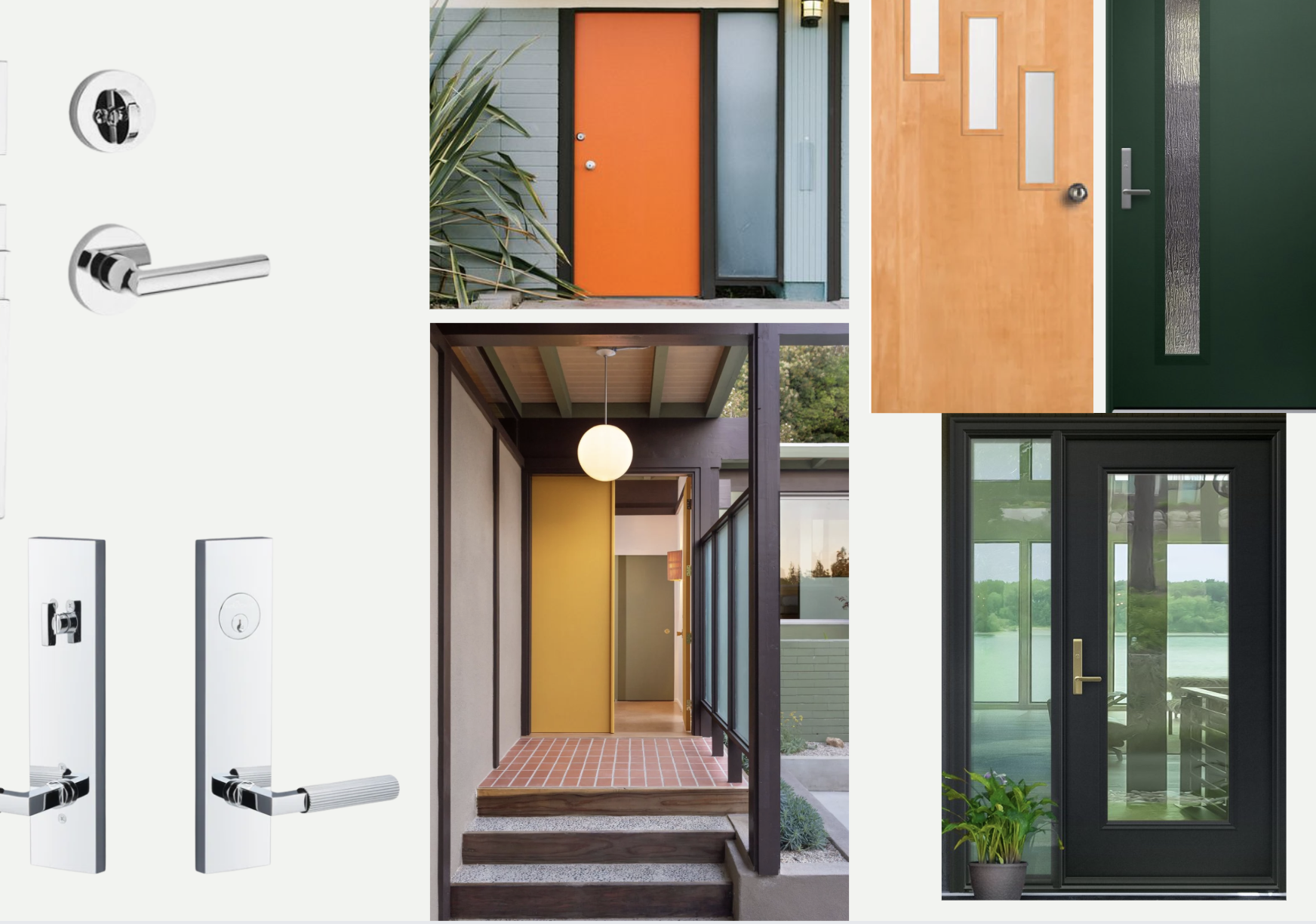
Mid-Century Modern
Mid-century is a style born from optimism and new materials. It came out of the postwar period, when there were suddenly things like plywood, factory-cut tile, and laminate -- materials that felt futuristic and that designers used to express a kind of democratic modernism. The Jetsons aesthetic, the Googie influence, chrome faucets that felt like they belonged on a spacecraft.
The materials are the story in a mid-century rebuild. I love laminate cabinets in a mid-century interior, which I know surprises people. Laminate has a bad reputation from the bad versions of it, but the material itself -- when it is an oaky warm tone with real variation -- reads beautifully in this style. It is historically accurate. It is also practical.
For tile in a mid-century kitchen, I look for something that plays with the optimism of the era. An aloe green or a warm mushroom tone on the backsplash, something that feels like a considered color choice rather than a safe neutral. Terrazzo makes a strong floor in a mid-century space -- it was everywhere in this period, from residential kitchens to the floors of the Chrysler Building, and it has come back into production with excellent contemporary versions.
Chrome is the correct faucet finish for mid-century. I will say that knowing it is also the most high-maintenance finish you can choose -- it shows every fingerprint. If you want the aesthetic without the upkeep, a brushed nickel gets you close. But if you want it right, you want chrome.
A note on where to start
Rebuilding a home in a style you love is not the same as recreating the house you lost. That is a distinction worth sitting with. You can honor what your home was, and you can also make choices you did not have the chance to make the first time. New infrastructure. Better insulation. A kitchen layout that finally works.
When I start working with a rebuild client on design, I ask them to bring me images -- Pinterest boards, saved photos, things they have walked past and noticed. Not because I need direction, but because those images tell me something about who you are and how you live. The design builds from there, piece by piece, until the room feels like yours.
That process takes time. It should. The decisions you make about materials and finishes are the ones you will live with every day. I think they deserve the attention.
If you are starting to think about the design side of your rebuild and want to talk through your style, we offer a no-cost design consultation. Come see the materials. Touch them. That is where it actually starts.